Many homeowners only begin thinking seriously about paperwork once they have accepted an offer on their property.
Unfortunately, this is often the stage when missing documents, unanswered questions and unexpected enquiries can cause the most disruption.
Preparing your home before selling doesn’t mean trying to resolve every possible issue before putting it on the market. It means organising the information, documents and visible property details that a buyer or their conveyancer is likely to ask about.
Taking these steps early can help reduce avoidable uncertainty and put you in a stronger position once the sale progresses.
For a broader overview of the process, see our guide on when should you instruct a conveyancing solicitor.
What Paperwork Do You Need Before Selling a House?
Before marketing your property, it’s sensible to gather the paperwork relating to its ownership, construction, maintenance and any alterations.
Depending on the property, useful documents may include:
- Title and ownership information: Title deeds or Land Registry details, together with any relevant ownership documents.
- Energy Performance Certificate (EPC): Most properties require a valid EPC when being marketed for sale, unless an exemption applies.
- Planning permission: Documents relating to extensions, conversions or other alterations where permission was required.
- Building regulations approval: Completion certificates or other relevant evidence for building work.
- Window certificates: FENSA, CERTASS or other appropriate building regulations documentation for replacement windows.
- Guarantees and warranties: Including roofing, damp-proofing, structural repairs and other significant work.
- Electrical and heating records: Available certificates, inspection reports and servicing documentation.
- Leasehold information: Where applicable, details of the lease, ground rent, service charges and managing agent.
Not every document will apply to every home, and not all are mandatory in every transaction.
However, gathering what you already have before marketing can make it easier to respond when questions arise.
For further information, see the GOV.UK guide to preparing to sell a home.
Check the Paperwork for Previous Building Work
Documentation becomes particularly important when a property has undergone significant alterations.
If your home has been extended, reconfigured, re-roofed or had replacement windows installed, buyers may want to understand what work was completed and whether the relevant approvals were obtained.
The same applies to previous damp treatment, structural repairs, drainage work or electrical alterations.
From a property-condition perspective, buyers can become concerned when there is evidence of substantial work but little information about why it was carried out or how it was completed.
Missing paperwork does not automatically mean the work is defective or that the property cannot be sold.
It can, however, lead to additional questions, further checks or delays while the information is investigated.
If documents are missing, identifying the gaps early gives you more time to discuss the appropriate next steps with your conveyancer.
Why Missing Documents Can Delay a House Sale
Once an offer has been accepted, the buyer’s conveyancer will raise enquiries about the property.
These may relate to ownership, boundaries, alterations, guarantees, disputes or other matters affecting the sale.
If important information cannot be provided promptly, the transaction may slow down while further enquiries are made.
Sometimes this leads to additional investigation, requests for clarification or discussions about the agreed purchase price.
This is why early preparation matters. It does not guarantee a problem-free transaction, but it can reduce the number of avoidable questions left unanswered.
What Should You Check Around Your Home Before Selling?
Legal preparation is only one part of getting a home ready to sell.
It’s also worth understanding the property’s visible condition before prospective buyers begin arranging inspections and assessments.
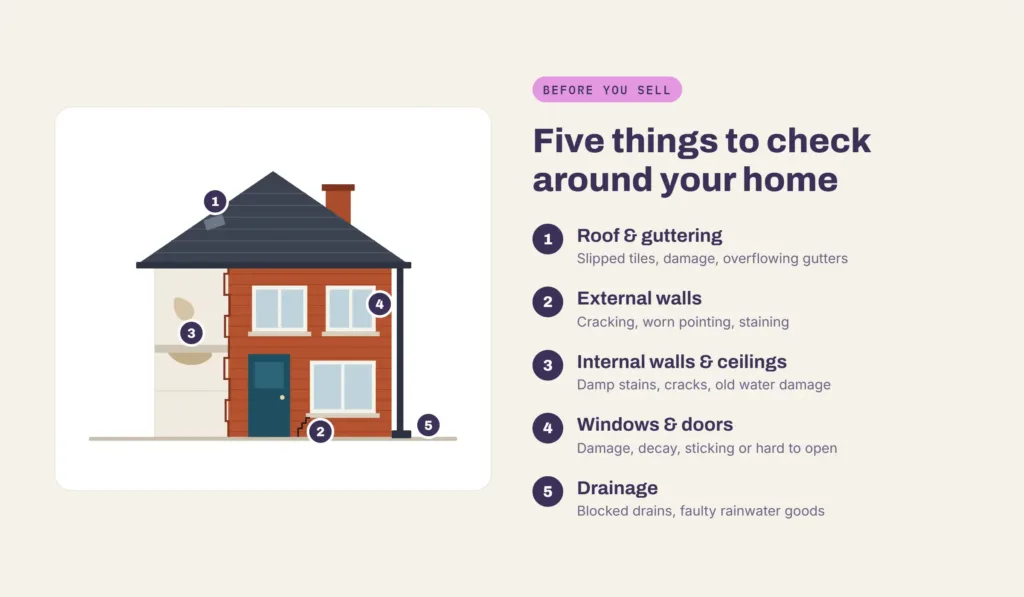
Some areas worth checking include:
- Roof and guttering: Look for visible damage, slipped tiles, overflowing gutters or signs of poor maintenance.
- External walls: Check for cracking, damaged pointing, staining or deteriorating brickwork.
- Internal walls and ceilings: Look for damp staining, significant cracks or evidence of previous water damage.
- Windows and doors: Note visible damage, deterioration or problems with opening and closing.
- Drainage: Look for obvious signs of blocked or overflowing drains and defective rainwater goods.
These are visual observations rather than a substitute for a professional survey or specialist investigation.
If potential concerns are only considered after a buyer has arranged a survey or property condition assessment, sellers can find themselves responding under considerable time pressure.
This doesn’t mean every visible defect needs to be repaired before marketing. Instead, it’s about understanding the property’s condition and deciding whether anything requires attention or further investigation.
How Survey Shack Can Help Sellers Prepare
Survey Shack helps homeowners and sellers understand visible property condition through guided, surveyor-built inspections.
Before putting a property on the market, sellers can use the app to work through accessible areas of their home, record visible concerns and create a structured property condition report.
This can help highlight issues that may attract questions during a buyer’s inspection, giving sellers an opportunity to understand them before the transaction is underway.
With Ask Kit, Survey Shack’s AI-powered inspection assistant coming soon, users will also be able to ask questions during an inspection to help understand what they are looking at and when further investigation may be appropriate.
Survey Shack does not replace legal advice, a formal property survey or specialist investigation. Its role is to help sellers become better informed about visible property condition.
Find out more about how Survey Shack works.
Should You Instruct a Conveyancer Before Finding a Buyer?
You don’t necessarily have to wait until an offer has been accepted before speaking to a conveyancer.
Instructing one earlier can give you time to organise the necessary information, check the property’s legal title and identify matters that may need attention before the transaction progresses.
This can be particularly helpful where a property has a complicated ownership history, previous alterations or leasehold arrangements.
For sellers looking to organise legal support earlier, 360 Law Services is a conveyancing firm operating in England and Wales. Its current regulatory status should be confirmed before publication.
Preparing Early Can Make Selling Less Stressful
Preparing your home before selling is about reducing avoidable uncertainty.
By gathering relevant documents, identifying missing information and understanding the property’s visible condition, sellers can approach the transaction with greater confidence.
Not every issue can be anticipated, and buyers may still raise questions as the sale progresses.
However, the earlier you organise your paperwork and property information, the better prepared you are to respond when those questions arise.