A house survey should help you understand the property’s condition, not leave you trying to decode caveats, ratings and referrals.
Survey Shack exists because we believe everyone should be able to understand property condition without needing a degree in building pathology. But we also know that some people still prefer to pay for a professional house survey or home condition survey – and that is completely reasonable.
For a buyer, a good residential building surveyor can be worth every penny. But for a seller? A traditional surveyor is often the person who breaks the chain. Unless a seller has already used Survey Shack to get ahead of the game, that in-person home condition survey usually feels less like “added value” and more like a last-minute ambush on their asking price. The problem is that finding a “good” one is harder than it looks.
Why Every House Survey Report Is Different
A lot of people assume that if a surveyor is part of a professional body, or the firm is regulated, the report will be the same standard as every other report carrying the same badge. That is not how it works. The RICS Home Survey Standard sets a framework for a RICS survey, but it does not make every report identical. Report writing style, judgement, experience, and how condition ratings are applied can vary significantly. This flexibility is too often abused. A broad condition rating allows one poor item to drag an entire section into a serious category. Unless the report is written with real care, you come away thinking every element in that section is failing, when in reality only one part may be causing concern.
This is where defensive reporting becomes dressed up as helpful reporting. It is liability management disguised as advice.
What a Good Property Survey Should Explain
A tailored report, given the significant cost for a property survey — often many hundreds or even thousands of pounds — should not simply state “damp specialist required” and leave the matter there.
Survey Shack may sometimes recommend a damp specialist because, in certain cases, that is the right next step. But our basic guidance is free, and if someone wants more tailored input, they can upgrade to speak with a surveyor for considerably less than the cost of a traditional house survey.
A professional, paid, on-site assessment should go further than a simple referral. It should:
- Explain whether the issue appears isolated or widespread.
- Identify external factors that could be contributing.
- Detail why further investigation is actually necessary.
That is the difference between a report that helps the client and a report that mainly protects the surveyor. A good report should explain what was seen, why it matters, what is likely, what cannot be confirmed, and what should happen next.
Do Not Buy the Logo. Buy the Judgement.
Competence and experience are not the same thing. Experience is time spent doing the job; competence is whether the surveyor can apply the right judgement to the property in front of them.
Professional affiliation (RICS, CABE, RPSA) still matters, but it isn’t a guarantee of quality. Ten years of inspecting modern cavity wall houses is not the same as five years inspecting the exact type of traditional property you are buying. Relevant experience beats generic experience.
🚩 The “No-Nonsense” Interview Checklist
Before you instruct, ask these four questions:
- “Can I speak to the actual surveyor?” Not the admin team or the sales office. You want to know how the person on the ladder thinks.
- “Do you have experience with this specific build?” (e.g., Victorian solid wall vs. modern timber frame).
- “Can I see a sample report on a similar property?” Look for explanations, not just checkboxes.
- “Will you explain the ‘Why’ behind a defect?” Or will you simply pass every meaningful issue to another professional?
Why Red is Not Always the Right Answer
At Survey Shack, we use Green, Yellow, Purple, and Red because the world isn’t binary.
We pioneered Purple because some items may look reasonable but still need paperwork, certification, or installation evidence before they can be treated as low risk. A traditional home buyers report that jumps straight to “Red” because records were not seen can make a property appear more alarming than it really is. The rating system should be clear, and the reasoning behind it should be explained.
What a Good House Survey Should Actually Deliver
The perfect surveyor — one who is a structural engineer, damp specialist, roofer, and electrician all in one — does not exist. A good residential surveyor, however, gives you strong general building pathology guidance and knows where the limits are.
Paying for a professional home condition survey should buy you judgement, not just access to a template. It should give you clarity, not just liability management.
Survey Shack gives you an earlier starting point to understand the property’s condition and ask better questions. If you still want a professional house survey, that is fine. Just choose carefully. Ask for the sample report. Speak to the actual surveyor. Check they know the building type.
And remember: Do not buy the logo. Buy the judgement.
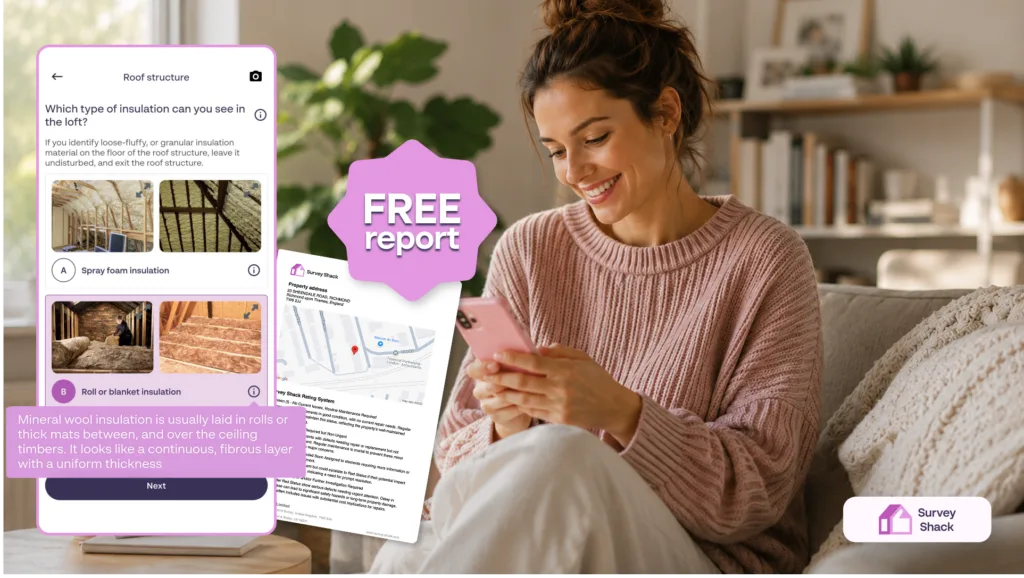
Want a clearer starting point before paying for a full house survey? Try Survey Shack free.