Cavity wall insulation is a common way to improve the energy efficiency of a home. By reducing heat loss through external walls, it can help keep rooms warmer and lower heating bills.
Many UK properties have cavity walls, but not all are insulated, and not every home is suitable for insulation to be added.
Whether you’re considering cavity wall insulation for your own home, buying a property or preparing to sell, it’s useful to understand how it works, what it costs and what should be checked before installation.
What Is Cavity Wall Insulation?
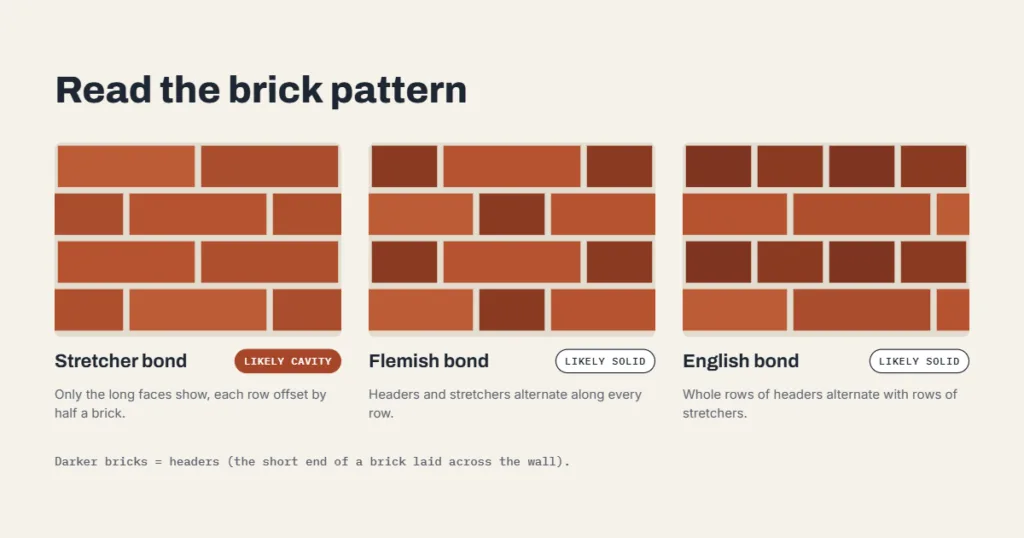
A cavity wall consists of two layers of masonry separated by a gap. This gap, known as the cavity, helps prevent rainwater reaching the inside of the property.
Cavity wall insulation works by filling the gap with insulating material, reducing the amount of heat that escapes through the walls.
The materials most commonly used include mineral wool and polystyrene beads. Polyurethane foam may also be used in certain circumstances, depending on the construction and suitability of the property.
How Is Cavity Wall Insulation Installed?
In an existing property, cavity wall insulation is normally installed from outside.
A specialist installer drills small holes in the external brickwork at regular intervals. Insulating material is then blown or injected into the cavity using specialist equipment.
Once the cavity has been filled, the holes are sealed with mortar to blend in with the surrounding wall.
For a typical home with easily accessible walls, installation can often be completed within a day, although the time required will depend on the size and construction of the property.
Cavity wall insulation should be installed by a suitably qualified professional rather than attempted as a DIY project.
How Much Does Cavity Wall Insulation Cost?
The cost of cavity wall insulation varies depending on the size of the property, the type of insulation used and how easily the walls can be accessed.
Although installation involves an upfront cost, the potential savings on heating bills can make it a worthwhile improvement over time.
A well-insulated home loses less heat through its external walls, meaning less energy may be needed to maintain a comfortable temperature.
The amount saved will depend on factors such as the property’s size, existing insulation, heating system and energy use.
For current estimated installation costs and energy savings, see the Energy Saving Trust’s cavity wall insulation guidance.
Is Your Property Suitable for Cavity Wall Insulation?
Not every home is suitable for standard cavity wall insulation.
Before installation, a specialist should assess the walls and establish whether the proposed insulation is appropriate.
Generally, the following conditions are important:
- Unfilled cavity walls: There must be a cavity that has not already been insulated.
- Suitable cavity width: The cavity needs to be wide enough for the proposed insulation system.
- Clear cavities: Rubble and other obstructions can affect how the insulation performs.
- Good external brickwork: The masonry and pointing should be in sound condition.
- Exposure to rain: Properties in locations exposed to severe driving rain may need particular consideration.
- Flood risk: The property’s exposure to flooding should be assessed before insulation is installed.
Where the cavity is narrow or irregular, or the property has particular exposure risks, a specialist may need to consider whether an alternative insulation system is suitable.
Existing damp patches should also be investigated and the underlying problem resolved before insulation is installed.
How Can You Tell If Your Walls Are Already Insulated?
Some properties already have cavity wall insulation, particularly newer homes where insulation may have been included during construction.
If you’re unsure, there are several ways to find out.
You can check any available building records, installation certificates or guarantees. Your property’s Energy Performance Certificate (EPC) may also provide useful information, although it may not confirm the insulation through direct inspection.
A specialist installer can carry out a borescope inspection, using a small camera inserted through a drilled opening to check whether the cavity contains insulation.
Small, regularly spaced areas of repaired mortar on external brickwork can also suggest that cavity wall insulation has previously been installed, although this is not conclusive.
Choosing a Cavity Wall Insulation Installer
Selecting a suitable installer is an important part of the process.
Before agreeing to the work, check that the installer has appropriate qualifications, experience and accreditation for the insulation system being proposed.
You should also establish whether the installation is covered by a guarantee.
Some cavity wall insulation installations are supported by the Cavity Insulation Guarantee Agency (CIGA), while others may have an independent insurance-backed guarantee.
Ask what the guarantee covers, how long it lasts and what documentation you will receive once the work is completed.
If the property shares a cavity wall with a neighbouring home, the installer should also consider whether a cavity barrier is needed to prevent insulation passing into the adjoining property.
What Should Buyers and Sellers Check?
If you’re buying a property, it’s worth establishing whether cavity wall insulation has already been installed.
Ask for any available installation certificates and guarantees, and check whether there are visible defects in the external walls that might need attention.
If you’re selling a property, having the relevant paperwork ready can help answer questions about the insulation and when it was installed.
For homeowners considering installation, the most important step is confirming that the property is suitable before arranging the work.
How Survey Shack Can Help
Survey Shack helps buyers, sellers and homeowners understand the property condition through guided, surveyor-built inspections.
When checking a property, users can record visible concerns with external walls, including cracked brickwork, defective pointing, staining or other signs of deterioration.
With Ask Kit, Survey Shack’s AI-powered inspection assistant coming soon, users will be able to ask questions during an inspection and better understand when further investigation may be appropriate.
Survey Shack also helps users produce a structured property condition report to keep track of their observations.
While a visual inspection cannot establish whether cavity wall insulation has been installed correctly, it can help identify visible issues that should be considered before making decisions about the property.
Find out more about how Survey Shack works.
Is Cavity Wall Insulation Worth Considering?
For many suitable homes, cavity wall insulation can be an effective way to improve comfort and reduce heat loss.
The key is making sure the property is suitable, choosing an appropriately qualified installer and keeping the relevant installation records and guarantees.
Whether you’re improving your home, buying or selling, understanding the property’s wall construction and condition can help you make a more informed decision.
📲 Download Survey Shack on the App Store