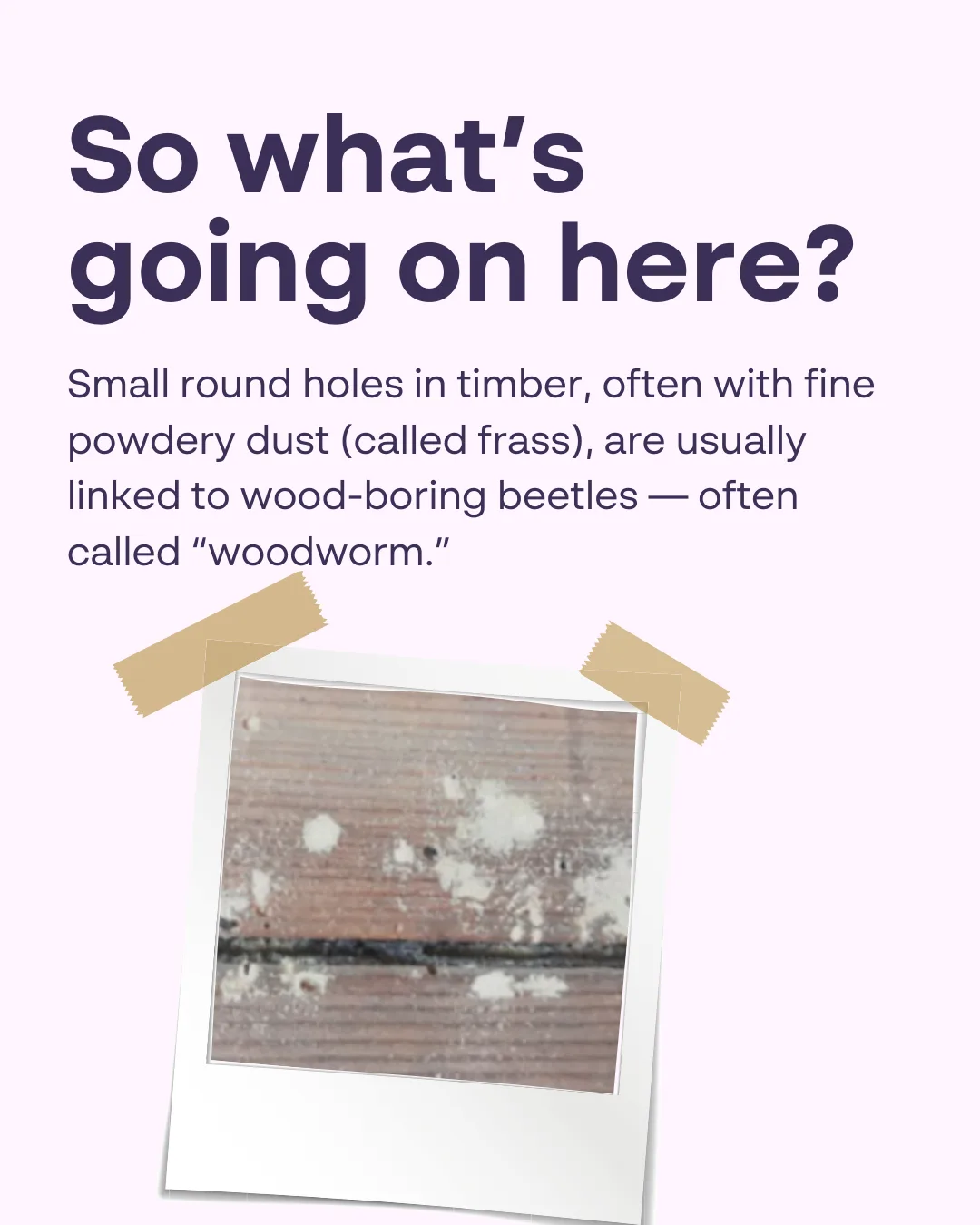
Spotting small holes in your beams or timber floors often leads to one conclusion: woodworm. It is the term most people use, and the common response is to reach for chemical sprays or call in a treatment company. But the science tells a different story.
Most so-called woodworm issues in homes are the result of past activity. The beetles have long gone. What remains is the damage they left behind and the confusion about what to do next. Here is the critical point: wood-boring beetles need moisture. If the timber is dry, they cannot survive, let alone infest.
Chemical treatments often promise to “kill the woodworm,” but they rarely penetrate deep enough into the timber to reach any larvae. Most sprays remain at surface level, which might kill a few adult beetles (if they are present), but they do very little to address the real issue — moisture. Worse, they introduce toxins into the home, can harm other insects (even helpful ones), and do nothing to improve the conditions that made the infestation possible.
What does work is understanding why beetles arrived in the first place:
- High timber moisture (typically above 18%) provides the perfect breeding ground.
- Poor ventilation, especially in roof spaces or underfloor voids, can create stagnant air and trap humidity.
- Modern interventions, such as plastic-based paints, cement render, or inappropriate sealing, can prevent timber from “breathing,” leading to long-term damp buildup.
So how do you get rid of beetles and keep them from coming back?
The answer is simple, but not always easy: dry the timber out. Once moisture content drops below around 12%, most species of wood-boring beetle can no longer survive. That means:
- Fixing any leaks, including roof coverings, flashings, gutters, and plumbing.
- Removing paints or sealants that trap moisture, especially from older buildings.
- Improving ventilation in lofts, basements, and floor voids.
- Checking that air bricks and sub-floor vents are clear and unobstructed.
Timber should be able to dry out naturally. In many cases, once the moisture drops, the infestation dies off on its own — no chemicals required.

Survey Shack helps you spot the root cause early
Survey Shack helps users understand how timber responds to moisture. Cracking, swelling, and decay are all signs that the environment needs attention, not just the wood. If the roof or sub-floor is unventilated, or if render or sealants are trapping moisture, those conditions will need to change. Where necessary, we suggest speaking to a damp and timber specialist who does not have a product to sell — just expertise.
At Survey Shack, we do not recommend chemical treatments or endorse companies who rely on them. Our goal is to explain what the evidence shows: beetle infestations are almost always a symptom of poor building conditions. Fix the environment, and the problem will usually stop.
If you are still unsure, speak to someone who specialises in heritage buildings or traditional construction. Understanding the actual cause saves time, money, and a lot of unnecessary chemicals.
Whether you’re searching for a home condition survey, a homeowner survey, wondering if having a house survey is worth it, or just Googling “cheapest house survey” or “homebuyers survey near me,” it doesn’t get more local than your pocket — and more affordable than £39.99.
Early clarity, better decisions!
Try Survey Shack today!